Triangle
Play Triangle
Triangle Screenshots







Triangle review
Honest impressions, gameplay insights, and practical tips for enjoying Triangle
Triangle is a narrative-driven adult game that mixes relationship management, branching choices, and stylized visual storytelling into a single experience. If you have seen the name Triangle mentioned in forums or recommendation lists and wondered what makes it stand out, this guide is for you. Drawing on hours of personal playtime and comparisons with similar titles, I will walk you through how Triangle works, what kind of content you can expect, and who is most likely to enjoy it. By the end, you will have a grounded picture of the game’s strengths, quirks, and potential deal-breakers.
What Is Triangle and Who Is It For?
So, you’ve heard the name Triangle floating around and you’re wondering what all the fuss is about. Is it just another adult game, or is there something more to it? 🤔 In this Triangle game review and overview, I’m cutting through the noise to give you a straightforward, player-focused look. Forget the marketing jargon—let’s talk about what Triangle actually is, who it’s truly made for, and whether you should spend your time on it. I’ll also share my honest, unfiltered first impressions after diving in for a solid session. Let’s get started.
Core concept and setting of Triangle
At its heart, what is Triangle? If I had to sum it up in a single sentence, I’d call it a character-driven, interactive narrative where your choices shape complex relationships. Think of it less as a traditional “game” with points to score and more as an interactive storybook where you steer the emotional journey. 🗺️
The core concept revolves around a central, tense dynamic between three main characters—yes, the “triangle” is both a clever title and a literal description. You step into the shoes of one character, navigating a web of existing history, simmering tensions, and new attractions. The gameplay is built on dialogue choices, pivotal decisions, and observing how those choices alter the story’s path and character perceptions. It’s all about cause and effect in the realm of human connection.
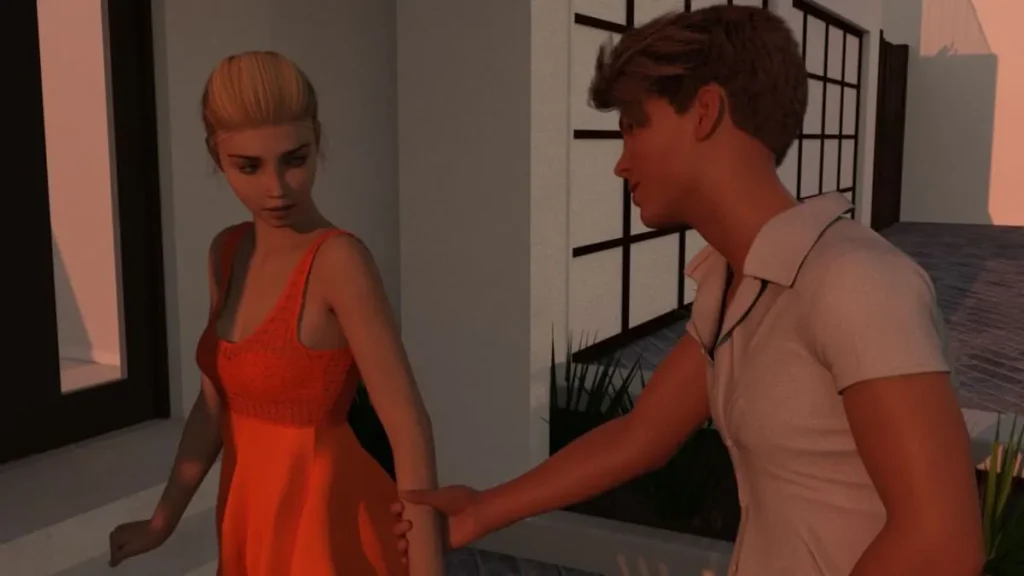
Now, about the world: Triangle presents a setting that feels grounded and modern. This isn’t a fantasy epic or a sci-fi odyssey. Instead, it opts for a relatable, almost cinematic reality—think stylish apartments, moody cafes, and conversations that stretch into the late hours. The tone is deeply atmospheric, leaning into a sense of melancholy, desire, and the weight of past decisions. The art style supports this perfectly, with a stylized realism that focuses on expressive character faces and evocative environments that tell a story of their own. You’re not just reading a story; you’re feeling the ambiance of these characters’ lives.
So, in this Triangle game overview, understand that you’re signing up for a slow-burn, psychological experience. It’s a game about subtle glances, loaded conversations, and the quiet moments where everything changes. If you’re looking for a narrative that trusts you with delicate emotional steering, you’re in the right place.
Who will enjoy Triangle the most?
This is the million-dollar question: who is Triangle for? Not every game is for every player, and being honest about that saves everyone time and disappointment. Based on my time with it, Triangle is a specialized experience that will resonate deeply with a specific audience.
First, the ideal player. You will absolutely love this Triangle adult game if:
* You are a story-first gamer. You play for the plot, the character development, and the emotional payoff.
* You love meaningful choices. You want your decisions to carry weight, to open or close paths, and to genuinely affect how characters view you.
* You enjoy complex character dynamics. Romance, tension, unresolved history, and moral ambiguity are your jam.
* You appreciate visual storytelling. You’re happy to spend time in beautifully crafted scenes, absorbing the details and the mood.
* You have the patience for a slow burn. The narrative takes its time to build pressure, like a pot coming to a boil.
Conversely, you might want to look elsewhere if:
* You crave fast-paced action or gameplay mechanics. There are no quick-time events, puzzles, or combat here.
* You prefer lighthearted, casual experiences. The tone here is mature and often introspective.
* You dislike reading or extensive dialogue. This is a text-heavy experience, though the writing is strong and the visuals complement it.
* You want a game with clear “good” and “bad” endings. Triangle thrives in shades of gray; outcomes feel human, not like rewarded or punished checkboxes.
To make it super clear, here’s a quick breakdown:
| 🎯 Triangle is IDEAL for you if… | ⚠️ Triangle might NOT be your fit if… |
|---|---|
| You prioritize narrative and character depth over gameplay mechanics. | Your primary interest is in action, strategy, or skill-based challenges. |
| You love making tough choices that alter relationships and story outcomes. | You prefer games with minimal reading and a more passive story experience. |
| You enjoy slow-burn, tension-filled dramas with mature themes. | You’re seeking a light, fun, or purely comedic interactive experience. |
| You appreciate stylized art and a strong, atmospheric vibe in a game. | You want clear moral binaries and guaranteed “happy” endings. |
Ultimately, Triangle is for the player who sees a game as a vehicle for a compelling, personal story. It’s a choice-driven narrative that asks you to engage emotionally, not just strategically.
My first impressions after a full play session
I went into my first proper session of Triangle with a mix of curiosity and caution. I’d seen the tags and the art, but I wanted to see how it felt to play. Was this Triangle game worth playing, or just a pretty shell? I settled in for a few hours to find out. ☕
My approach was simple: I decided to role-play authentically. Instead of trying to “game” the system or guess the “best” outcome, I made choices based on what felt right for the moment, based on the personality the game was sketching for my character. Right away, I was struck by the quality of the presentation. The user interface is clean and unintrusive, and the character art is stunning—full of subtle expressions that do a lot of the emotional heavy lifting. A raised eyebrow, a hesitant smile, averted eyes… these details pulled me in immediately.
What surprised me most in the opening hour was the pacing. I’ll be honest: I initially wondered if things were moving too slowly. The first major story beat took its time to arrive, and I found myself thinking, “Come on, when does the drama start?” I spent a lot of time in seemingly ordinary conversations. This was my initial minor gripe.
But then, I had a moment that completely flipped my perspective. It wasn’t a dramatic argument or a romantic scene. It was a quiet, early interaction where my character and another were cleaning up after a small gathering. The dialogue options were simple—helpful, observational, or quietly flirtatious. I chose an observational line, commenting on a book left on the shelf. The other character’s response was a mix of surprise and vulnerability, revealing a hidden passion and a past dream they’d let fade. The scene didn’t advance any “plot” in a major way, but it fundamentally changed how I saw that character and deepened my connection to the story. It made the world and the people in it feel lived-in.
That’s when it clicked: The “game” in Triangle isn’t about reaching milestones; it’s about uncovering layers. The slow pace wasn’t a bug—it was the feature. It was building trust and history, so when the bigger emotional punches landed, they would actually hurt (in the best way).
From that point on, I was hooked. I stopped waiting for “something to happen” and started savoring the happening itself—the awkward silences, the tentative jokes, the loaded subtext. The choice system revealed its cleverness too. Decisions rarely felt like they were about picking a “romance path,” but about defining my character’s personality: Are they kind or selfish? Do they avoid conflict or confront it? This subtlety made my playthrough feel uniquely mine. By the end of my session, I wasn’t asking “what is Triangle” anymore; I was deeply invested in answering “what will my triangle become?”
So, is Triangle worth playing? If you’re the type of player described above, absolutely. Don’t come in expecting fireworks from minute one. Come in expecting to sit with these characters, to listen, and to make small choices that echo into big consequences. My first impressions evolved from mild impatience to genuine captivation. It’s a game that rewards your attention and emotional investment with a story that feels personal and powerfully human. For the right player, that’s a rare and wonderful thing.
Triangle is ultimately a game about navigating relationships, making choices, and seeing how small decisions ripple through a stylized, adult-focused story. If you enjoy sinking into character-driven narratives and do not mind reading your way through branching scenes, it can be a surprisingly engaging way to spend a few evenings. On the other hand, if you are looking for twitchy action or simple, no-commitment gameplay, Triangle probably will not become your new favorite. Take a moment to think about the kind of experience you want right now—if layered character interactions and choice-heavy storytelling sound appealing, Triangle is worth adding to your list and trying for yourself.