
Dual Family
Play Dual Family
Dual Family Screenshots

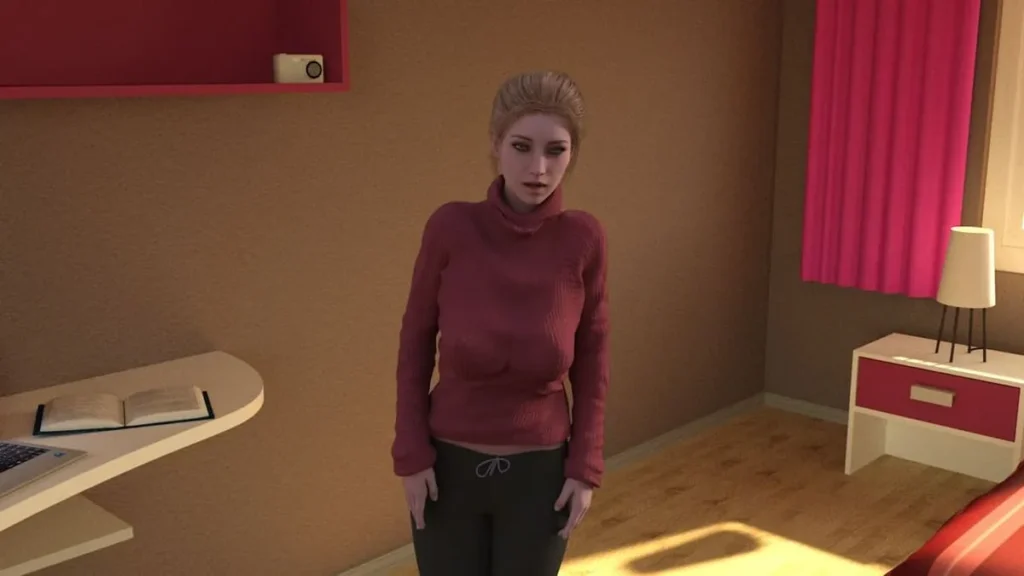
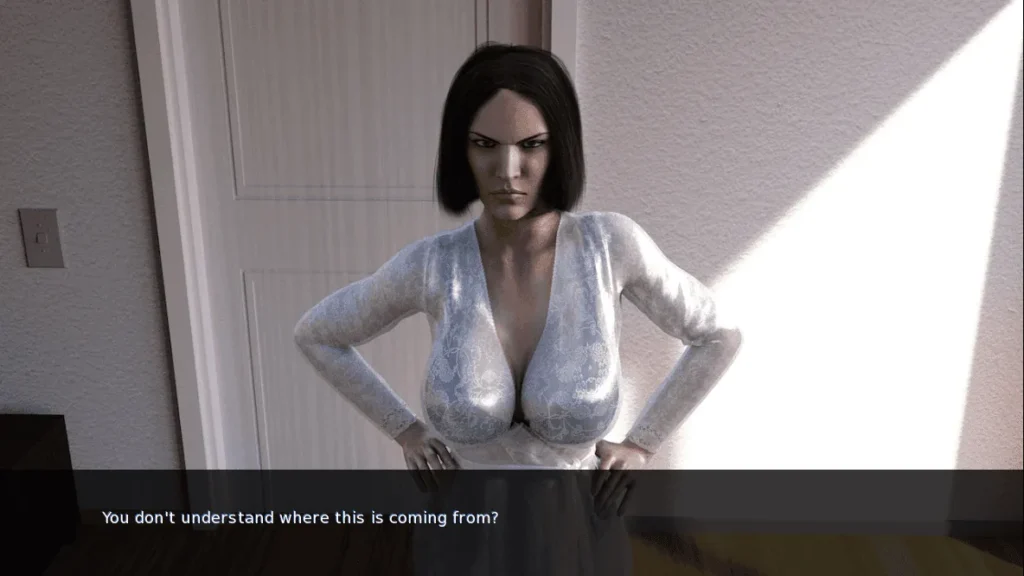
Dual Family review
Explore the branching storylines, character choices, and immersive mechanics of this interactive adult experience
Dual Family stands out as a choice-driven interactive experience that puts you in control of a family’s narrative during their most turbulent moments. Developed by Gumdrop Games, this game offers a unique dual-perspective system where you can play as either the father or son, each experiencing the family crisis from completely different angles. With branching storylines, meaningful decisions that shape outcomes, and detailed character development, Dual Family delivers an immersive experience that goes beyond typical interactive narratives. Whether you’re drawn to the complex character dynamics or the consequence-driven gameplay, understanding what makes this game distinctive helps you appreciate its depth and replay value.
Understanding Dual Family’s Core Gameplay Mechanics
So, you’ve heard about Dual Family—this interactive experience that everyone says is defined by its choices and branching stories. But what does that really mean when you actually start playing? 🤔 If you’re like me, diving into a new interactive story can sometimes feel overwhelming. You’re presented with a big decision right at the start, and suddenly you’re worried about locking yourself out of cool content or making a “wrong” choice.
Let me put your mind at ease. The genius of Dual Family gameplay mechanics isn’t about finding one perfect path; it’s about embracing the journey you create. It’s a choice-driven narrative game where every selection feels personal and impactful. The core loop is deceptively simple: you observe, you decide, and you live with the results. But underneath that simplicity lies a beautifully complex web of systems working in harmony to make your story feel uniquely yours.
In this chapter, we’re going to pull back the curtain. We’ll explore the three pillars that make this experience tick: the dual perspective you control, the branching narrative your choices create, and the living web of relationships that reacts to your every move. By the end, you’ll not only understand how it works—you’ll be ready to dive in and truly shape your own tale.
How the Dual Perspective System Works
The very first choice you make in Dual Family sets the stage for everything: do you want to see this world through the eyes of the father, Alex, or the son, Jamie? This isn’t just a cosmetic choice or a simple difficulty setting. This is the game’s foundational multiple protagonist perspective, and it fundamentally changes your gameplay experience. 🎭
Think of it like this: you’re not just playing one character in a story; you’re given the director’s chair for two interconnected lives. Playing as Alex, a man trying to rebuild stability, you’ll face dilemmas about responsibility, past regrets, and providing for a family that feels increasingly distant. Your options in conversations might lean towards being protective, authoritative, or seeking peaceful resolutions.
Switch to Jamie, a young adult navigating independence and identity, and the same family home becomes a different world entirely. Your choices often revolve around rebellion, exploration, challenging authority, or seeking peer approval. A single event—like a heated dinner table debate—plays out with completely different internal monologues, available dialogue choices, and underlying goals depending on who you are.
My Insight: I played my first run entirely as Jamie and was convinced Alex was just the “overbearing dad” archetype. On my second playthrough as Alex, I discovered the immense pressure he was under at work and his genuine fear of failing his family. It completely reframed every argument I’d previously witnessed! This system doesn’t just tell you a story; it teaches you empathy by forcing you to live in another character’s shoes.
The magic happens in the gaps between these perspectives. Information is deliberately withheld or presented differently. A secret Jamie keeps might be a source of anxiety in his storyline, while Alex’s path is filled with the frustration of sensing a lie but not knowing what it is. To get the full, unfiltered truth of any situation, you genuinely need to play through both sides. This design is a masterclass in creating replay value; the second playthrough isn’t just a rerun, it’s a revelation.
To give you a clearer picture of how deep this split goes, let’s break it down:
| Aspect | Alex (Father) Perspective | Jamie (Son) Perspective |
|---|---|---|
| Core Narrative Focus | Rebuilding stability, managing mid-life crises, protecting the family unit. | Forging independence, exploring identity, navigating social circles and future anxieties. |
| Key Relationship Dynamics | Navigating a potentially strained marriage, mentoring (or clashing with) Jamie, reconnecting with old friends who represent a past life. | Testing boundaries with parental authority, forming deep bonds (romantic or platonic) with peers, viewing Alex as either a guide or an obstacle. |
| Exclusive Story Content | Workplace dilemmas, meetings with a financial advisor, private conversations with other parents, accessing “adult” social spaces. | College or job interview scenarios, late-night parties, secret meet-ups with friends, accessing youth-centric hangouts. |
| Typical Decision Stakes | Choices often impact family finances, long-term security, and marital trust. | Choices often impact personal freedom, social standing, and self-discovery. |
Choice-Driven Narrative and Branching Paths
Now, let’s talk about the engine that powers your unique story: the branching storyline system. This is where Dual Family transcends being a passive visual novel and becomes a truly interactive visual novel experience. Every choice, from the monumental to the seemingly mundane, is a fork in the road. There’s no “wait, the game didn’t remember that!” here. 🛤️
The game’s narrative is structured like a sprawling tree, not a straight line with occasional detours. Early decisions don’t just affect the immediate next scene; they plant seeds that grow into major plot branches hours later. Did you choose to open up to a character about your fears in Chapter 2? That moment of vulnerability becomes the reason they trust you with a crucial secret in Chapter 7. Conversely, a flippant, dismissive remark might close a door of opportunity permanently.
This creates a powerful sense of consequence-based gameplay. The game doesn’t use a morality meter (good/evil, paragon/renegade). Instead, it tracks your behavioral consistency and relationship investment. The story adapts to the kind of person you’re choosing to be—are you a confrontational Alex or a conciliatory one? Is Jamie openly rebellious or quietly resistant?
Let me give you a concrete example from my playthroughs. Around the midpoint, both Alex and Jamie face a version of the same core conflict: a family heirloom goes missing.
- The Catalyst: The heirloom (a vintage watch) is gone. Alex notices it first. Jamie was the last one seen near it.
- The Immediate Choice (Alex’s Path): Do you confront Jamie directly and aggressively, ask him calmly about it, or decide not to mention it and investigate silently?
- The Immediate Choice (Jamie’s Path): If you took the watch (maybe to pawn it for quick cash or impress someone), do you lie outright, confess immediately, or try to deflect blame?
This single decision point ripples outwards. Here’s how it branched in two of my runs:
- Run 1 (Alex: Calm Inquiry / Jamie: Lie): Alex’s calm approach made Jamie defensive. The lie was believed… for now. This created a “Suspicion” flag in Alex’s mind. Later, Alex found pawn shop receipts, leading to a much larger, explosive confrontation where trust was shattered. Jamie’s storyline then branched into a “Cover-Up” arc, involving more lies to friends.
- Run 2 (Alex: Silent Investigation / Jamie: Confess): By not confronting, Alex discovered Jamie’s genuine motive (he needed money for a friend’s emergency). This unlocked a hidden, heart-to-heart conversation option later. Jamie’s honest confession, while initially causing tension, branched the story into a “Redemption” arc where Alex offered help, strengthening their bond and unlocking cooperative story options against a different external threat.
See how that works? 🤯 One crossroads, multiple valid paths, and each one sends the characters and their relationships spiraling in a different narrative direction. This choice-driven narrative game philosophy ensures no two players will have an identical story to tell.
Character Relationship Tracking and Consequences
This brings us to the beating heart of the experience: the relationship tracking system. If the branching narrative is the “what” of the story, this system is the “why.” Every character you meet has a dynamic, living profile that is constantly updated by your actions. This isn’t just a simple “Jamie +5” pop-up. It’s a complex web of visible and hidden metrics that track trust, respect, romance, resentment, and familiarity. 💝
The system is beautifully transparent in some ways and intriguingly opaque in others. You can usually access a “Connections” menu to see the general state of your key relationships (e.g., “Strained,” “Warm,” “Trusting,” “Romantic”). However, the specific numerical values or flags are hidden, which prevents you from “gaming” the system and encourages authentic role-playing.
The most crucial aspect is interdependency. Pursuing a close bond with one character can directly affect your standing with another. This mirrors real-life social dynamics perfectly.
* Spending all your time as Jamie with a rebellious friend might improve that friendship but simultaneously decrease your “Understanding” score with Alex, who sees that friend as a bad influence.
* As Alex, choosing to work late repeatedly to secure a promotion (improving a “Career Security” metric) might steadily drain the “Connection” score with your spouse.
The game’s consequence-based gameplay shines brightest here. Major story beats are often gated behind relationship thresholds. That secret family history subplot? Only available if Alex’s trust level with his own father is high enough. That unique romantic ending with a certain character? It requires not just choosing flirty options, but also making key plot decisions that align with their values.
This creates a fantastically organic sense of drama. You’re not just watching conflicts unfold; you’ve authored them through a hundred small choices. When two characters you care about end up in a bitter argument, you can trace the conflict back to your own actions—maybe you promised each of them different things, or your favoritism was too obvious. This makes the emotional payoffs, whether joyous or tragic, feel deeply earned.
Ultimately, the Dual Family gameplay mechanics work in unison to create a singular experience: a story that belongs to you. The dual perspective gives you depth, the branching narrative gives you agency, and the relationship tracking gives your choices emotional weight. It’s a masterful blend that proves in an interactive visual novel, the most powerful feature isn’t the graphics or the script—it’s the profound illusion that every word you choose truly matters. Your story is waiting to be written. Which path will you take first?
Dual Family delivers a sophisticated interactive experience that prioritizes player choice and narrative depth. The game’s dual-perspective system, combined with its branching storylines and relationship tracking mechanics, creates a personalized journey where your decisions genuinely shape the outcome. With multiple endings and high replay value, the game rewards exploration of different character paths and decision-making strategies. The detailed character development, atmospheric sound design, and polished visual renders work together to create an immersive world that feels lived-in and consequential. Whether you’re experiencing the father’s perspective or the son’s journey, Dual Family offers a compelling blend of meaningful choices and character-driven storytelling that sets it apart in the interactive narrative space. Dive into the game and discover how your decisions reshape this family’s destiny.