
A Summer’s End – Hong Kong, 1986
Play A Summer’s End – Hong Kong, 1986
A Summer’s End – Hong Kong, 1986 Screenshots







A Summer’s End – Hong Kong, 1986 review
An in-depth content guide to the visual novel and its narrative experience
A Summer’s End – Hong Kong, 1986 is a hand-drawn visual novel that follows Michelle and Sam as they navigate a blossoming relationship amid the sights and sounds of 1980s Hong Kong, and it blends romance, family dynamics, and period atmosphere to craft an evocative, character-driven experience. This article dives into the game’s narrative, design, and optional adult content, offering personal reflections, practical guidance for new players, and analysis of what makes the title memorable. If you loved cinematic cityscapes, retro soundtracks, and nuanced queer storytelling, read on for a full guide to getting the most from this game.
Story and Characters: Who Are Michelle and Sam?
At its heart, the A Summer’s End – Hong Kong, 1986 story is a tender, intimate exploration of love found in the most unexpected place. It follows Michelle, a reserved office worker navigating the rigid expectations of her traditional family, and Sam, a free-spirited artist from Vancouver visiting the city. Their chance meeting sparks a connection that forces both women to confront who they are and what they truly want. Set against the vibrant, transformative backdrop of 1986 Hong Kong setting, a city caught between its colonial past and an uncertain future, their personal journey mirrors a larger cultural moment of change and possibility.
“You’re not from around here, are you?”
That simple line of dialogue, from their first encounter at a cinema, perfectly captures the tentative curiosity that defines the beginning of the Michelle and Sam relationship. Michelle, grounded in her local world, immediately senses Sam’s different energy. This chance meeting becomes the inciting incident for a narrative that explores the central conflict between personal identity and family expectations. Michelle grapples with the weight of familial duty and societal norms, while Sam, though more outwardly confident, is searching for her own place and artistic voice. The game’s branching paths lead to different endings, ultimately asking whether their budding relationship can survive the pressures of this specific time and place.
Plot overview and setting in 1986 Hong Kong
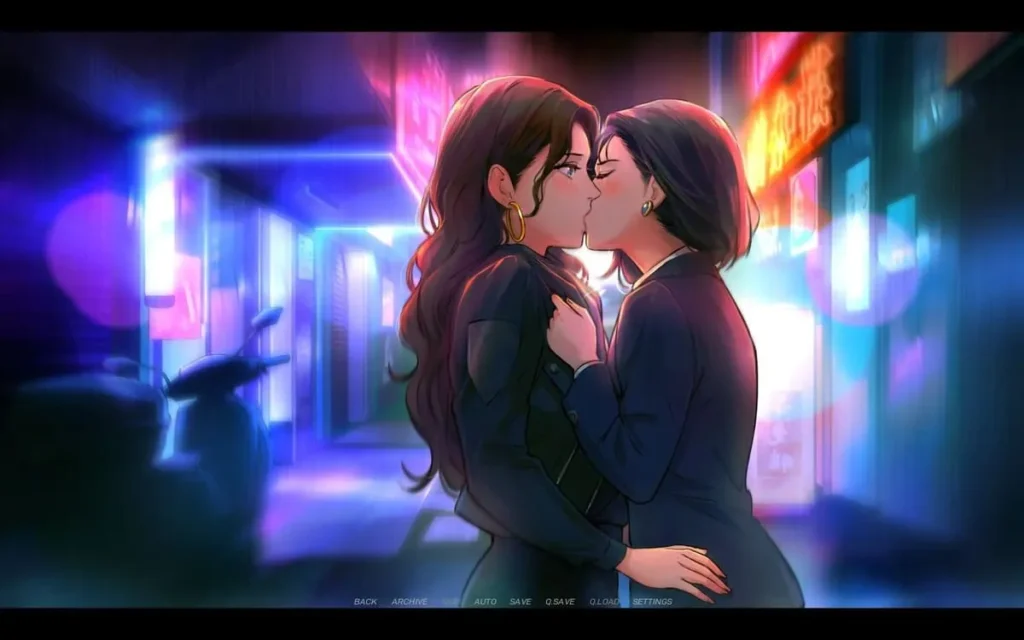
To understand Michelle and Sam, you must understand their world. Hong Kong in 1986 is a character in itself 🏙️. The neon-drenched streets, the bustling wet markets, the lingering colonial architecture—every background is a lovingly crafted piece of nostalgia. This isn’t just aesthetic; it’s foundational to the family dynamics in game. The city is on the brink of the Handover, creating a palpable atmosphere of “what comes next?” that parallels the characters’ personal crises.
I remember first booting up the game and being instantly transported. The soundtrack’s synth-wave melodies mixed with the detailed sprite work of a crowded dai pai dong or a quiet MTR station felt astonishingly authentic. This attention to detail does more than set the scene; it defines the constraints the characters live within. Michelle’s life is mapped between her office, her family’s apartment, and familiar local spots. Sam’s arrival literally and figuratively shows Michelle new parts of the city, symbolizing the new avenues of her own life opening up. The 1986 Hong Kong setting provides the specific social tension—conservative yet modernizing, familial yet individualistic—that makes their romance both dangerous and exhilarating.
Character deep dives: Michelle, Sam, and supporting cast
The visual novel characters in A Summer’s End are remarkably nuanced, feeling like real people with complicated histories and hopes.
Michelle is the anchor. She’s diligent, somewhat introverted, and deeply filial. Her motivation is initially to maintain harmony, to be the “good daughter” by excelling at her stable office job and fulfilling her family’s quiet expectations. Player choices heavily influence her arc, determining how much she dares to embrace her desires. Will she hide her growing feelings for Sam, or risk confrontation for a chance at personal happiness? Her journey is the core of this queer narrative visual novel, a careful unfolding of self-acceptance.
Sam is the catalyst. As a Chinese-Canadian artist, she exists between worlds, which grants her a perspective Michelle lacks 🎨. She’s confident, forward, and openly queer, but not without her own vulnerabilities about her art and purpose. Her motivation is connection—to her heritage, to a meaningful creative life, and to Michelle. The player’s dialogue choices shape how Sam reveals herself, whether she becomes a gentle guide or a passionate rebel in Michelle’s life.
The supporting cast brilliantly amplifies the central themes through the family dynamics in game.
| Character | Relation | Narrative Role |
|---|---|---|
| Michelle’s Mother | Family | Embodies traditional expectations and the pressure of familial duty. Her dialogues often highlight the conservative social backdrop. |
| Michelle’s Colleagues (e.g., Rita) | Work/Society | Represent the “normal” path for a woman in that era—office gossip, future talk of marriage, reinforcing the status quo Michelle is questioning. |
| Joey | Friend (to Sam) | Provides a sounding board and a link to a more open, artistic community. Offers a contrast to Michelle’s world. |
These characters aren’t just obstacles; they form the ecosystem Michelle must navigate, making her choices—and their consequences—feel profoundly real.
Themes: identity, family, and cultural context
The power of this A Summer’s End – Hong Kong, 1986 story lies in how it braids its grand themes into quiet, personal moments.
Identity Exploration vs. Cultural Conservatism 🎭: This is the game’s central tug-of-war. Michelle’s entire arc is a moving exploration of identity. Specific moments, like her hesitant answers when her mother asks about her “new friend,” are loaded with subtext. The game masterfully uses the 1986 Hong Kong setting‘s unique social climate to heighten this tension—it’s a place of burgeoning modernity where old-world values still hold immense power in the home.
Family Pressure and the Private vs. Public Self: The family dynamics in game are the primary source of conflict. A poignant example is the family dinner scene, where casual conversation about future plans feels like an inquisition to Michelle. The theme of maintaining a “public face” while nurturing a “private desire” is critical. The Michelle and Sam relationship develops in stolen, private moments—a rooftop, Sam’s rented room, a quiet bar—highlighting what must be hidden.
The Balance of Desire and Duty: This theme is beautifully illustrated through the game’s optional romantic scenes. I replayed once with the adult patch enabled, and it created a fascinating contrast. Without it, the relationship’s growth is conveyed through intense emotional dialogue and implication, which is incredibly powerful. With the patch, those intimate moments are shown, adding a layer of physical vulnerability and passion that deepens the stakes. It becomes less about implication and more about tangible, risky commitment, making the potential fallout with family feel even more severe.
How to Experience This Story
To get the most from this rich queer narrative visual novel, a little strategy goes a long way.
Save Often, in Multiple Slots: This is crucial. The game’s branching paths are subtle, often hinging on single dialogue choices. Multiple save files let you explore conversations without fear.
- Embrace Dialogue Variation: Don’t just chase a “good” ending. Choose responses that feel true to how you see Michelle in the moment. The authenticity of the Michelle and Sam relationship shines when you role-play her hesitations, her boldness, or her confusion.
- Try Both Endings: The two main endings aren’t simply “good” and “bad.” They are two valid, emotionally resonant conclusions to the story pressures the game establishes. Experiencing both is essential to fully appreciating the narrative’s questions about sacrifice, happiness, and reality.
- Pay Attention to the Environment: Let the 1986 Hong Kong setting sink in. The art and music aren’t just backdrop; they’re storytelling tools that convey mood, tension, and character feeling.
Ultimately, A Summer’s End – Hong Kong, 1986 uses its specific time, place, and incredible characters to tell a universal story about the courage to choose yourself. By guiding Michelle through her summer of transformation, we witness a beautifully crafted piece of interactive storytelling that stays with you long after the credits roll.
A Summer’s End – Hong Kong, 1986 stands out as a tender, well-crafted visual novel that combines strong writing, evocative period visuals, and an affecting soundtrack to tell a compact story about love, identity, and family in 1980s Hong Kong. Playing through both outcomes—first without optional scenes, then with them if you choose—reveals the care the creators put into character development and atmosphere. Whether you come for the narrative, the art, or the music, the game rewards thoughtful play and replay. Try different choices, save often, and share your reactions with other players to deepen your appreciation.